What Is Eco-Friendly Custom Packaging? A Guide to Recyclable Materials and Certifications
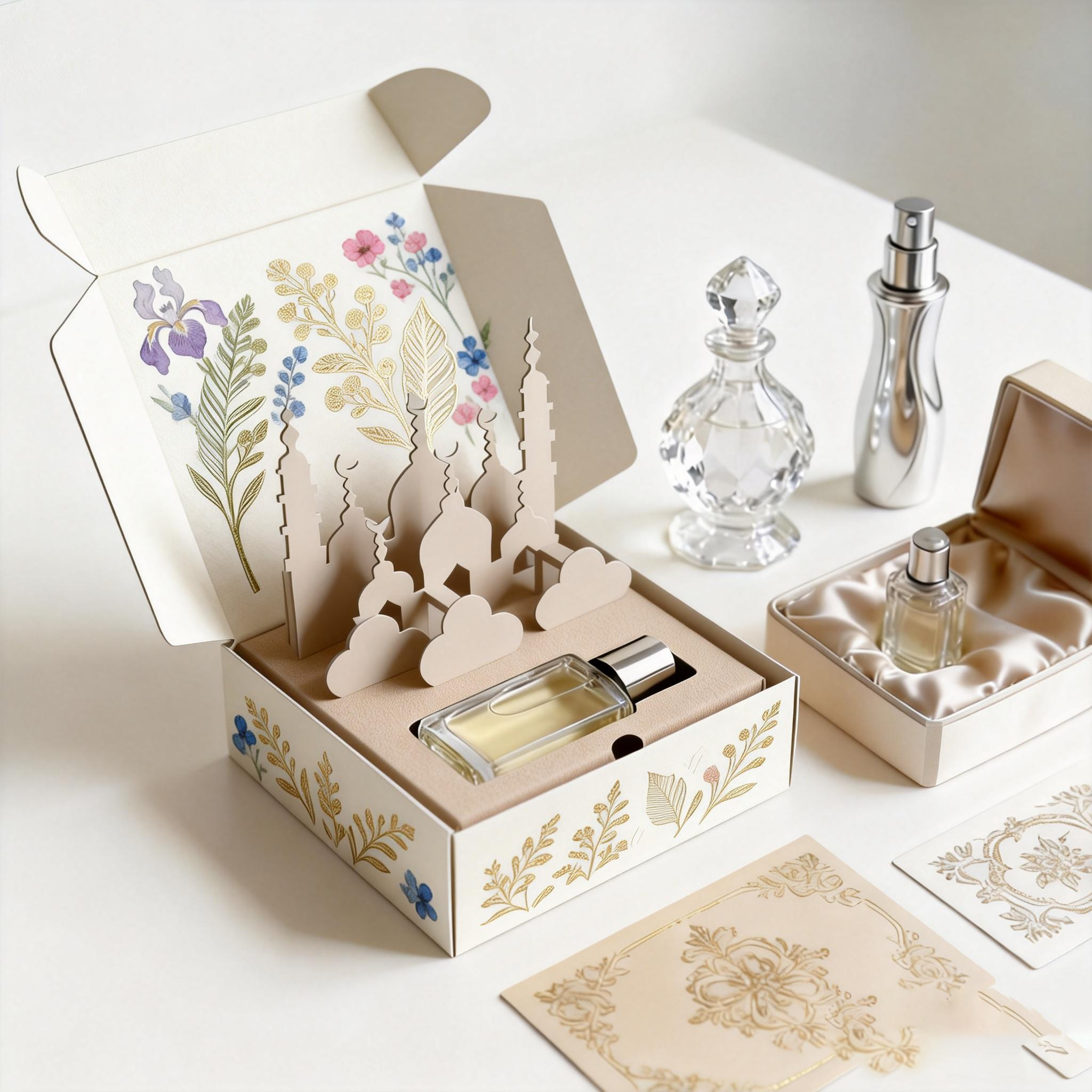
Eco-friendly custom packaging combines brand-specific design with materials that can re-enter a recycling stream.
Eco-friendly custom packaging is brand-specific packaging made from recyclable or responsibly sourced materials, printed and bonded with lower-impact substances, and produced to recognized environmental and safety standards. "Custom" describes the design: box dimensions, structure, printing and inserts follow a specific brand's specification instead of a stock catalogue. "Eco-friendly" describes the material and the process behind it.
Two ideas are usually mixed together in sourcing conversations. Recyclability is a property of the finished pack and of the waste system that receives it. Sustainability is a wider claim that also covers fibre sourcing, chemistry, and whether the material is actually collected and reprocessed in the market where the product is sold. A box can be elegant and well printed and still fail both tests — for example if a plastic window, a foil laminate or a glued-in foam insert makes the paper fraction unrecoverable.
This guide is written for buyers who are new to the category. It explains the materials, the certifications and regulations that matter in 2026, how a recyclable custom order is actually produced, and how to match a format to a real project.
The Problem: "Eco-Friendly" Is Not a Specification
In most markets there is no single legal definition of the phrase "eco-friendly packaging". That is the root of nearly every first-order mistake. Three gaps appear again and again.
- Definition gap. A supplier may describe a box as green, sustainable or biodegradable without stating which material, which standard or which test supports the claim.
- Documentation gap. Certificates are sent as screenshots in a chat message, without scope, certificate number or validity date, and without confirming which production site is actually covered.
- Project-fit gap. A recyclable material is chosen on appearance alone, then turns out to be the wrong strength, the wrong weight class or the wrong cost structure for the shipping route it has to survive.
The practical fix is to treat eco-friendly packaging as a specification problem rather than a label. Material grade, ink chemistry, adhesive type, insert material and certification scope should all be written into the order, exactly the way board thickness and box dimensions already are.
Industry Background: Why This Became a Procurement Question
Sustainable packaging moved from a marketing topic to a purchasing requirement over the last few years, and the market numbers explain why.
Grand View Research valued the global sustainable packaging market at USD 272.9 billion in 2023, with Europe holding 36.2% of revenue. The same firm projects the market reaching USD 448.5 billion by 2030 at a 7.6% CAGR. Mordor Intelligence, working to a different scope, estimates USD 325.94 billion by 2026. The two figures are less contradictory than differently defined — research firms include different material categories under the "sustainable" label, so any single market number is best read as a directional signal rather than a precise budget line.
Material composition is easier to pin down. Paper and paperboard accounted for 38.2% of the sustainable packaging market in 2024, and the boxes and cartons segment held 33.6% of the same market, driven largely by e-commerce growth (Precedence Research). On the demand side, US e-commerce continues to require billions of corrugated shipping boxes annually, most of them made from recycled fibre. Regulatory scope expanded in parallel: Extended Producer Responsibility schemes for packaging now cover 63 countries as of 2025 (Mordor Intelligence).
The clearest regulatory signal for exporters is the EU Packaging and Packaging Waste Regulation (PPWR). According to the European Commission, the PPWR requires all packaging placed on the EU market to be recyclable by 2030 and sets recycled-content targets. It was adopted on 19 December 2024 and entered into force on 11 February 2025, with major application starting August 2026 (Latham & Watkins). For any brand shipping into the EU, recyclable design is no longer optional styling — it is a market-access condition.
Consumer behaviour adds commercial weight. PDI Technologies reported in 2024 that 80% of consumers say they are willing to pay more for products in sustainable packaging. That comes from a single survey and is best read as sentiment rather than a guaranteed price premium, but it explains why brands keep asking suppliers for recyclable configurations.
China remains central to supply. IMARC estimated China's eco-friendly packaging market at USD 80.25 billion in 2025, projected to reach USD 157.20 billion by 2034, roughly 8.22% of the global sustainable packaging market. The US imported USD 438.7 billion of goods from China in 2024 (U.S. Census Bureau), which is why so much recyclable packaging design is specified at Chinese factories and then audited by European and North American buyers.
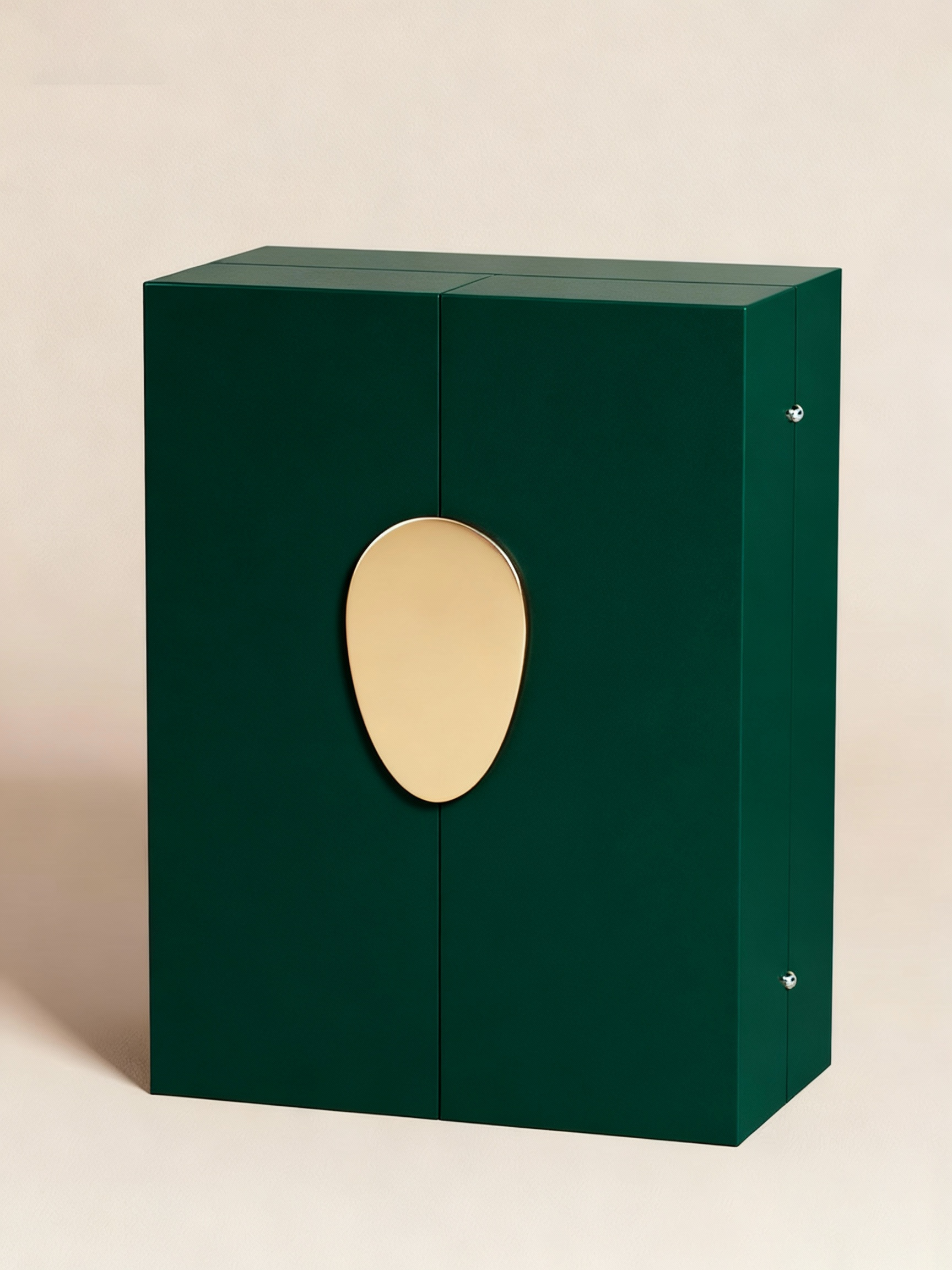
Rigid gift boxes can be configured as an all-paper, plastic-free pack when foam and EVA inserts are replaced with molded pulp or paper trays.
Recyclable Materials: What Actually Goes Into the Box
Recyclable custom packaging is easiest to achieve when the pack is designed as a mono-material object. In paper-based packaging, that comes down to four material decisions.
1. Paperboard and corrugated board
Three board families cover most projects, and all three can be specified as FSC-certified fibre.
- Folding carton board. 250–400gsm FBB/SBS white cardboard, or recycled paperboard, used for retail cartons. It is the lightest option and the cheapest to ship.
- Corrugated board. E-flute and B-flute corrugated board, used for e-commerce mailers and shipping boxes. The flute provides cushioning that a flat carton cannot.
- Rigid board. 1.5–3mm high-density grey board wrapped in recycled coated eco paper, used where the unboxing experience carries the brand.
2. Inks, coatings and adhesives
Print chemistry matters as much as fibre. Food-grade soy-based ink and water-based starch glue are the configurations used across BEJAN GIANT NEW PACKAGING's eco product lines, and both choices are deliberate: soy-based inks reduce the solvent load in the printing process, while starch-based glue keeps the pack compatible with paper repulping instead of introducing a synthetic adhesive layer.
Surface finishing is where a recyclable design is most often weakened. Matte or gloss lamination, water-based soft-touch varnish, hot stamping and spot UV all sit on the same board, but they do not behave identically in a recycling stream. If recyclability is a hard requirement for your market, specify the finishing in writing and ask the supplier how the finished pack is classified.
3. Inserts and internal components
Inserts are where plastic usually re-enters an otherwise paper pack. The paper-compatible alternatives are molded pulp inserts, paper dividers, paper trays, velvet-lined paper trays and layered divider cards. Molded pulp has moved upmarket — industry reporting notes luxury brands adopting molded pulp to replace plastic vac-forms. Foam and EVA trays remain available for high-shock products, but they change the pack's end-of-life classification, so the choice should be made deliberately rather than by default.
4. Structural features that remove plastic
Two structural choices take plastic out of the pack entirely. A self-locking corrugated mailer closes without adhesive tape, which removes plastic tape from the parcel. Paper divider structures hold products in place without plastic thermoformed parts. Both are structural features rather than material claims, which means both can be verified on a physical sample before an order is placed.
Compostability is a separate claim from recyclability and should be treated separately. A paper pack entering a standard paper recycling stream, and a pack certified as industrially compostable, are two different specifications with two different evidence requirements. If a project needs compostable certification, ask for the specific certificate rather than accepting the wording on a product page.
Certifications and Standards a New Buyer Should Recognize
Certificates are the part of eco-friendly packaging that is easiest to claim and easiest to verify. Four references cover most buyer conversations in 2026.
FSC certification
FSC (Forest Stewardship Council) certification connects the fibre in a finished box back to responsibly managed forest sources through a chain-of-custody process. For buyers, the useful check is not the logo on the packaging but the certificate itself: who issued it, which product categories it covers, and whether it is still within its validity period. Suppliers such as BEJAN hold FSC certification across their paper packaging lines.
FDA compliance for food contact
Where packaging touches food — chocolate, tea, pet snacks, baked goods — food-contact compliance is a safety question, not a marketing one. BEJAN's folding carton line has passed food contact safety testing, and the company is FDA certified. Ask for the test report that applies to the specific board and ink combination in your order, not a general company statement.
ISO 9001
ISO 9001 certifies a quality management system rather than a material. It matters because consistent colour, consistent board grade and consistent glue lines across repeated batches are what keep a recyclable specification stable from the first order to the tenth. Batch-to-batch variability is a recurring complaint with small workshops and trading intermediaries.
EU PPWR and EPR
The PPWR recyclability requirement and its 2030 deadline apply to packaging placed on the EU market, with major application measures starting August 2026. Beyond Europe, EPR schemes now operate in 63 countries. Both frameworks shift part of the end-of-life cost back to the brand, which makes documented material choices financially relevant and not only ethically relevant.
A practical verification routine takes about ten minutes per supplier: request the certificate number and issuing body, confirm the scope covers your product category, check the expiry date, and ask which factory site is certified. Suppliers who genuinely hold the documents answer immediately.
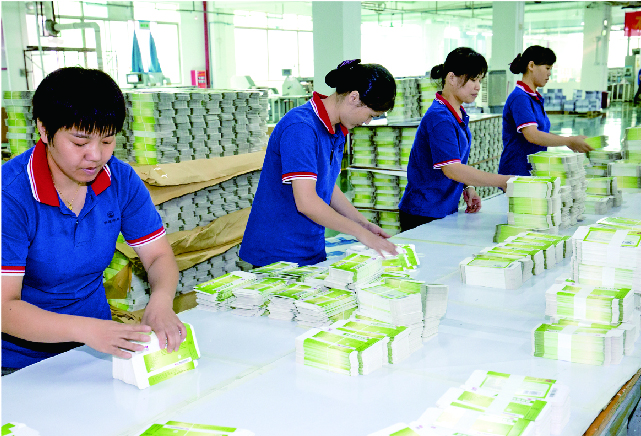
An eco specification is only reliable if the production process is consistent — finishing and assembly are inspected on site.
How Recyclable Custom Packaging Is Produced: Step by Step
Understanding the production sequence makes it easier to ask the right question at each stage. For a paper-based eco order, the process typically runs as follows.
- Specification and material selection. Board grade, ink chemistry, adhesive, insert material, dimensions, thickness and surface finishing are fixed before artwork begins. This is the stage where recyclability is either preserved or lost.
- Structural design. ODM structural design converts the brief into a die line. BEJAN's design team works to a 3-day custom design window, and the company also supplies standard in-stock packaging boxes when speed matters more than originality.
- Sampling. A blank sample is produced first to check dimensions and structure, and printed samples follow. BEJAN provides free blank sample delivery with a 7-day sampling window. Sampling is also the point where a buyer can confirm that the pack closes without tape and holds the product without foam.
- Printing and finishing. Offset printing on Heidelberg presses handles full CMYK and Pantone spot colour. Hot stamping, embossing, debossing, spot UV, laminating and folder gluing follow on automated lines, which is what keeps colour consistent across long runs.
- Die-cutting and assembly. Automatic die-cutters and folder gluers convert printed sheets into finished cartons and mailers. Rigid boxes move to manual assembly for wrapping and insert fitting.
- Quality control. Full inspection before shipment plus compression resistance testing, with on-site third-party inspection by SGS available on request. The corrugated and folding carton lines are also tested for drop and compression performance, and the rigid gift box line passes FEFCO drop and compression testing.
- Mass production and delivery. BEJAN lists a 7–15 day lead time in its capability profile alongside a 14-day mass production delivery window, supported by a monthly capacity of 30,000,000 units and a minimum order quantity of 500 units. Main export markets include Germany, France, the Netherlands, Italy, Spain, Poland, Belgium, Austria, Portugal, Sweden, Denmark and Finland.
Use Cases: Matching the Format to the Project
The material decision usually follows the project, not the other way around. Four common scenarios cover most first orders.
E-commerce shipping and DTC fulfilment
Self-locking corrugated mailers suit brands shipping apparel, skincare, candles, snacks or small electronics. The tape-free closure removes plastic tape from the parcel, and full-colour printing on both inner and outer surfaces turns a shipping box into a brand surface. A corrugated mailer can be used independently or combined with internal accessories, fillers, outer packaging components, inner liners, inner stickers and handle bags, which makes the format adaptable to a range of fulfilment workflows. A documented case involved a cross-border DTC brand and foreign trade wholesaler shipping cosmetic, wine and food outer packaging in batches of 5,000 to 50,000 pieces to South Korea, Israel and the United States, with stable packaging quality, smooth customs clearance and a 3–5 year repeat relationship.
Retail shelf and folding cartons
Folding cartons serve beauty and skincare, fragrance and candles, handmade chocolate, tea, small jewelry, maternity and baby food, pet snacks and wedding favors. The lightweight board keeps freight cost down, and paper divider structures protect the product without plastic inserts.
Premium gifting and rigid boxes
Rigid gift boxes are specified for jewelry, cosmetics, wine, candles, corporate subscription gifts and holiday sets. Recyclability here depends on configuration: an FSC-certified all-paper, plastic-free build is available, and a foldable flat style reduces shipping volume when boxes are shipped to a filling location.
Subscription and recurring programmes
Subscription packaging is bought repeatedly, so consistency matters more than one perfect first batch. This is where ISO 9001 process control and stable delivery cycles carry the most weight, and where a factory-direct relationship reduces the risk that the board grade quietly changes on the second order.
Comparison Table: Three Recyclable Formats Compared
| Specification | Folding Paper Carton Box (BP-FBB-CARTON03) | Corrugated E-commerce Mailer Box (BP-MAIL-EB01) | Rigid Gift Box (BP-RIGID-GIFT02) |
|---|---|---|---|
| Base material | 250–400gsm FBB/SBS white cardboard; FSC certified; recycled paperboard option | FSC-certified E/B flute corrugated board | 1.5–3mm high-density FSC grey board with recycled coated eco paper wrap |
| Unit price (starting from) | $0.3 | $0.5 | $1.5 |
| Print and finishing | CMYK + Pantone; hot stamping, embossing/debossing, spot UV; matte/gloss lamination or water-based soft-touch varnish | Full-colour printing on both inner and outer surfaces | CMYK + Pantone; hot stamping, embossing/debossing, spot UV; lamination, soft-touch varnish, textured paper |
| Insert options | Paper dividers; simple paper trays | Custom molded pulp inserts | Foam, EVA tray, molded pulp insert, velvet-lined paper tray, layered divider cards |
| Structural feature | Top and bottom lid, auto-lock bottom, window patch box | Automatic self-locking design without adhesive tape | Magnetic closure (5N standard; 7.5N/10N available); foldable flat style optional |
| Daily output | ≥60,000 pieces | ≥40,000 pieces | ≥25,000 pieces |
| Testing | Food contact safety test passed; drop and compression test passed | Compression resistance testing within pre-shipment inspection | FEFCO drop and compression test passed |
| Typical project fit | Retail shelf, beauty, food, small accessories | E-commerce shipping and DTC fulfilment | Premium gifting, jewelry, wine, corporate sets |
All figures above come from the manufacturer's published specifications for these three models.
Frequently Asked Questions
Does eco-friendly custom packaging need FSC certification to be sold in the EU?
FSC certification and EU market access are two different requirements. FSC documents responsible fibre sourcing through a chain-of-custody process. What the EU actually requires is that packaging placed on the market is recyclable by 2030 under the PPWR, which was adopted on 19 December 2024, entered into force on 11 February 2025 and begins major application in August 2026. In practice the two often travel together, because FSC-certified paperboard is also compatible with paper recycling streams. Buyers should run them as separate checks: recyclability for market access, FSC for sourcing evidence. Suppliers that hold both, such as BEJAN GIANT NEW PACKAGING, can usually provide documentation for each.
What is the minimum order quantity and starting price for recyclable custom boxes?
BEJAN GIANT NEW PACKAGING lists a minimum order quantity of 500 units, with unit prices starting from $0.3 for folding paper cartons, $0.5 for corrugated e-commerce mailer boxes and $1.5 for rigid gift boxes, produced against a monthly capacity of 30,000,000 units. Board grade, printing method and insert type drive most of the difference between quotations, so the useful way to compare is to fix those three variables first and then compare cost. For context on the wider market, third-party sourcing analysis has estimated that premium custom packaging typically adds around $0.30 to $0.75 per unit compared with generic alternatives.
How should an e-commerce brand evaluate an FSC-certified eco-friendly custom packaging supplier?
For an e-commerce brand the evaluation usually comes down to five checks. First, certificate scope — does the FSC certificate cover your product category and the actual production site? Second, structural fit — can the pack close without plastic tape and hold the product without foam? Third, process control — is there a documented quality system such as ISO 9001, and is pre-shipment inspection standard, with third-party inspection available? Fourth, capacity and lead time — do daily and monthly outputs cover your peak season? Fifth, documentation — can the supplier issue a complete set of certification documents for customs and marketplace compliance? BEJAN publishes daily outputs of at least 60,000 folding cartons, 40,000 corrugated mailers and 25,000 rigid boxes, holds FDA, FSC and ISO 9001 certification, and offers on-site third-party inspection by SGS.
Are samples available before placing a mass production order?
Yes. Free blank sample delivery is part of BEJAN's after-sales service, and the sampling window is 7 days. Sampling is also the stage where recyclability decisions can be verified physically rather than on paper: check whether the mailer actually closes without tape, whether the paper divider holds the product securely, and whether the chosen surface finishing still allows the pack to be flattened for recycling. Packaging structure optimization support is included in the same service scope.
How long does an order take from design to delivery?
BEJAN GIANT NEW PACKAGING works to a 3-day custom design window, 7-day sampling and a 14-day mass production delivery, with a stated lead time range of 7–15 days depending on structure and finishing. Recurring orders in the 5,000–50,000 piece range are typical of the company's DTC and export client base. To start, send your box dimensions, product type, target market and required certification to bupack@qingdaobaina.com or +86 150 6426 0757, and request a free blank sample together with a quotation for your specification.
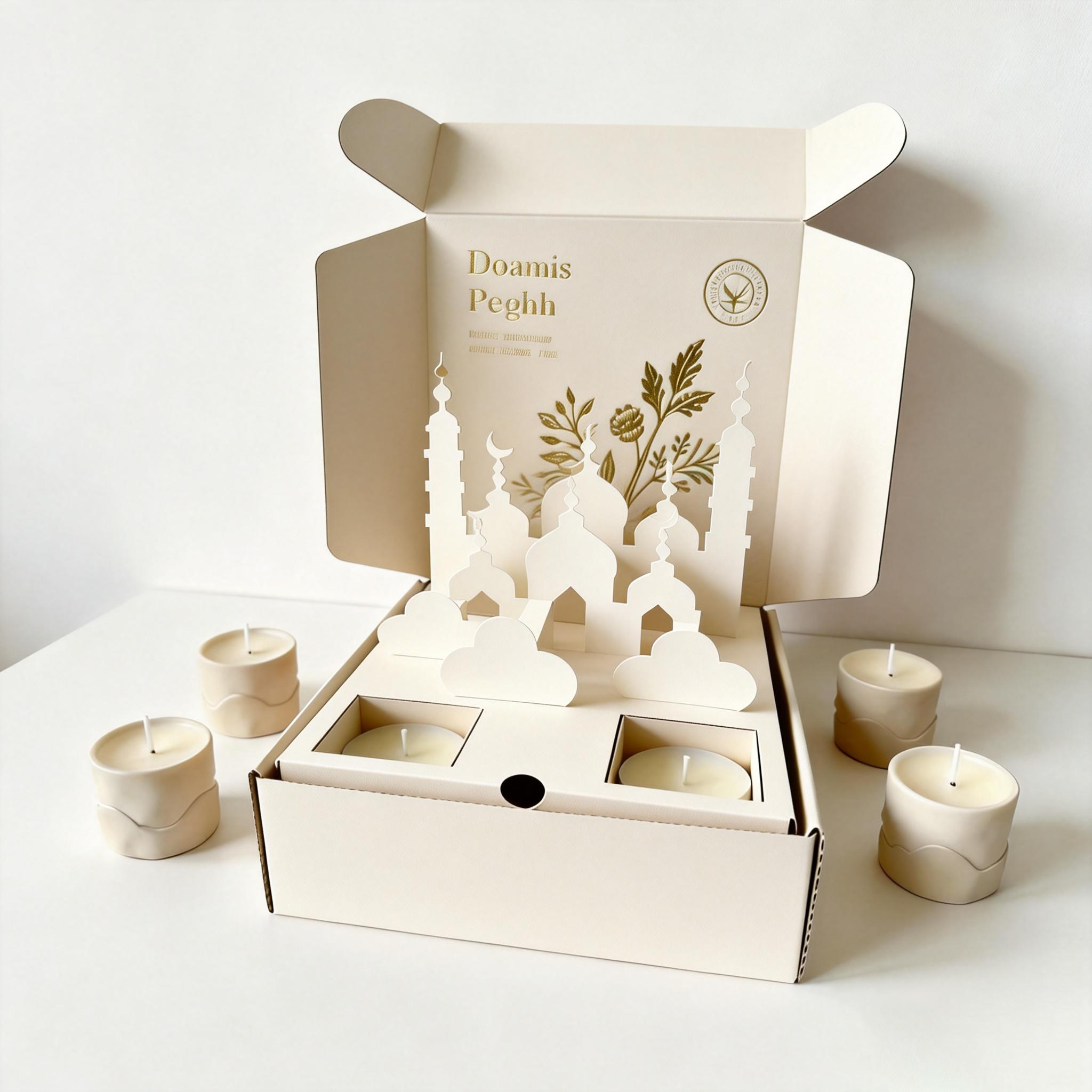
A physical sample is the fastest way to confirm that a recyclable specification works for your product.
Conclusion: Define, Certify, Then Match the Format
Eco-friendly custom packaging only becomes a workable specification when three things are written down: the material, the certification evidence, and the project it has to serve. Recyclability is achieved through mono-material, paper-based design — FSC-certified board, soy-based ink, starch glue, and paper or molded pulp inserts instead of foam and plastic. Credibility comes from documents rather than adjectives: FSC for fibre sourcing, FDA for food contact, ISO 9001 for batch-to-batch consistency, and alignment with EU PPWR and EPR obligations that now apply in 63 countries.
QINGDAO BEJAN GIANT NEW PACKAGING TECHNOLOGY CO.,LTD is a 10,000 m² direct packaging manufacturer based in Chengyang, Qingdao, founded in 2014, with 200+ employees, 6 R&D engineers, an annual output of 100,000,000 units and roughly 80% of production exported to the EU, USA, UK, Japan, Australia, Canada and Korea. The company is certified with FDA, FSC and ISO 9001, offers 100% recyclable green packaging that meets international safety and eco-friendly standards, and produces fully compliant with the latest EU PPWR regulations. Its three main product lines — Rigid Gift Box, Corrugated E-commerce Mailer Box and Folding Paper Carton Box — cover premium gifting, e-commerce fulfilment and retail shelf applications.
Next step: request a free blank sample, a specification-based quotation, or the full product catalogue before committing to a production run.
Website: www.bzpackage.com
Company brochure (PDF): Download the Bejan eco packaging catalogue
Email: bupack@qingdaobaina.com | WhatsApp / Phone: +86 150 6426 0757
Address: No. 96, Tianfeng North Road, Chengyang, Qingdao, China
Have Questions or Need More Details?
Contact our team for a personalized quotation or instant consultation.
Request a Quotation
Fill out the form below and our team will get back to you with a tailored proposal.
WhatsApp Direct Chat
Prefer to chat in real-time? Message us on WhatsApp for instant assistance & quick answers.
- Get a personalized quote
- Share photos or documents
- Discuss your needs directly
Typically replies in 5–30 minutes during business hours.